Educational information
1. What a first trip is for
Before you move or invest, it helps to see the country for yourself: how a city runs on a Tuesday morning, what January heat feels like, how long it takes to get from one place to another. A first trip doesn't have to be long. It has to be well planned.
This guide covers what is worth seeing and how to use those days to test daily life, not just to sightsee.
2. Asunción
The capital sits on the Paraguay River and was founded in 1537. It is the country's political, economic and cultural centre.
- Historic centre: the National Pantheon of Heroes, on Calle Palma, was begun in 1863 and only finished in 1936, because the War of the Triple Alliance halted the work. Nearby is the Palacio de López, seat of the Executive, in neoclassical style. Access is restricted, so you see it from the outside.
- Places to explore: the Municipality of Asunción suggests, among others, Loma San Jerónimo, Chacarita, the Carlos Antonio López Railway Station, the Port, the bay and the Botanical Garden.
- Riverfront: the Costanera Sur, opened in July 2024, runs 8.1 km from Avenida Colón to Cerro Lambaré, with a linear park and sports areas.
3. The Jesuit Missions and Encarnación
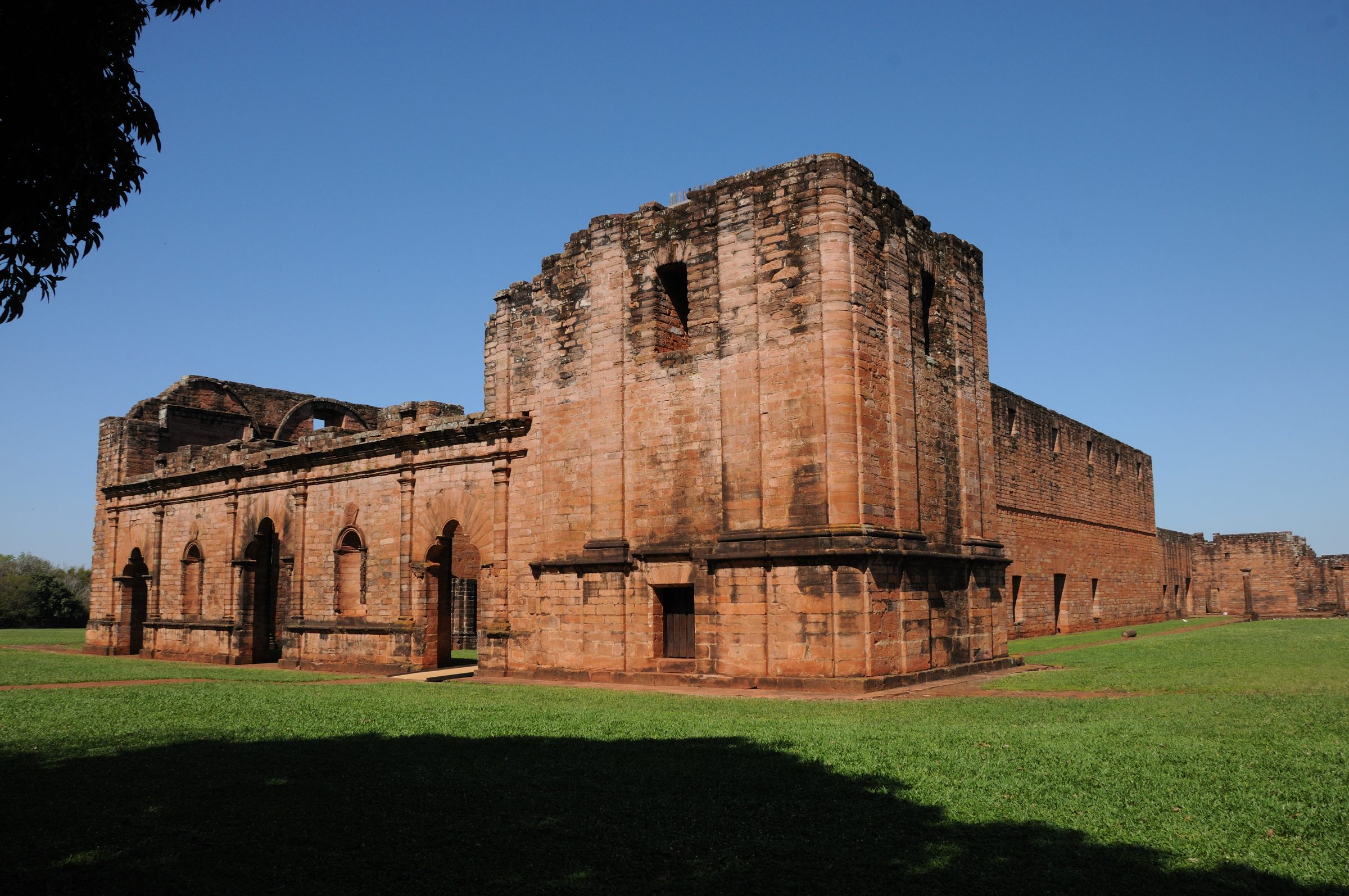
The Jesuit Missions of La Santísima Trinidad de Paraná and Jesús de Tavarangue, in the department of Itapúa, have been a UNESCO World Heritage Site since 1993.
- Trinidad was founded in 1706 and lies about 29 km from central Encarnación, on Ruta VI. It offers a night-time light and sound tour.
- Jesús de Tavarangue was founded in 1685. Its church was left unfinished after the Jesuits were expelled in 1767. It also has an evening show.
Encarnación is on the Paraná River, linked to Posadas (Argentina) by the San Roque González de Santa Cruz bridge. The Costanera República del Paraguay, about 8.7 km long, and San José beach opened in 2011. The city is the «National Carnival Capital»: parades are held in January and February at the Centro Cívico (Sambódromo) on the riverfront.
4. San Bernardino and Lake Ypacaraí
San Bernardino is about 50 km from Asunción, on the shore of Lake Ypacaraí. German immigrants founded it in 1881, and today it is one of the country's main summer resorts. On the same lake, about 28 km from the capital, is Areguá, with its lakeside promenade and the Candelaria church on the hill.
It makes an easy day trip from Asunción and shows you what life looks like in a small town outside the capital.
5. Ciudad del Este and Itaipú
Ciudad del Este was founded in 1957, while the Friendship Bridge to Brazil over the Paraná River was being built. It is a regional shopping hub. Visit Paraguay highlights Lago de la República and the El Mensú Museum.
Itaipú Binacional welcomes visitors at its Tourist Complex, based in Hernandarias, and reported more than 330,000 visitors to its attractions in the first half of 2026. Check times and bookings on its official site before you go.
6. The Chaco and the Mennonite colonies
The Western Region feels like a different country. Filadelfia, capital of the department of Boquerón, is about 470 km from Asunción and was founded by Mennonite settlers. Loma Plata is about 450 km away, and there is also Neuland.
- Museums: in Filadelfia, the Casa de la Colonia, built in 1933 and 1934 as the seat of the Fernheim Colony. Loma Plata and Neuland also have museums about the pioneers.
- History: the forts of the Chaco War (1932–1935), such as Boquerón, Isla Po'í and Toledo.
Distances are long: if you go, allow at least two or three days.
7. How to plan the trip
- Base yourself in Asunción to see the capital and Greater Asunción, with a day trip to San Bernardino or Areguá.
- South: Encarnación and the Missions, if you are drawn to the Paraná River and a mid-sized city.
- East: Ciudad del Este and Itaipú, if you are looking at the border with Brazil.
- Chaco: only if you have time or a specific interest in the region.
Two areas seen properly beat five seen in a rush.
8. Test the routine, not just the sights
- Make the journeys at real times: morning commute and school pick-up.
- Go back to the area at night and, if you get the chance, in the rain.
- Do a supermarket run and stop at a pharmacy as you would if you lived here.
- Stay in a flat or a house, not only a hotel: you'll notice the difference.
If you like, you can visit the projects I market during your trip.
9. Weather by season
According to the 2024 Climate Yearbook of the Directorate of Meteorology and Hydrology (DMH), summer (January to March) and spring (September to November) were warmer than average that year, and the highest reading was 44.2 °C in Mariscal Estigarribia, in the Chaco. Winter brought frosts, mainly in June, July and August. Check the DMH forecast before you travel.
10. Entering the country
Entry requirements are published by Paraguay's National Directorate of Migration, and visa rules by nationality by the Ministry of Foreign Affairs. Check them well ahead, before you buy your tickets.
What we checked and what we didn't
- We don't include ticket prices or opening times: they change often and are confirmed on each official site.
- Visit Paraguay also mentions the San Cosme y San Damián mission; on UNESCO's list, the missions inscribed as World Heritage are Trinidad and Jesús.
- We left out Iguazú Falls and the Saltos del Monday because we could not verify them today in an official Paraguayan source.
- The climate figures cover one year (2024), not a long-term average.
Official sources
Information checked in October 2026
- UNESCO World Heritage Centre: Jesuit Missions of La Santísima Trinidad de Paraná and Jesús de Tavarangue
- Visit Paraguay (SENATUR): Asunción, National Pantheon of Heroes, Government Palace, Encarnación, Trinidad, Trinidad Mission, Jesús de Tavarangue Mission, San Bernardino, Areguá, Ciudad del Este, Filadelfia, Boquerón, Casa de la Colonia Museum
- Municipality of Asunción: Places to visit and opening of the Costanera Sur
- Municipality of Encarnación: Beaches and riverfronts
- Itaipú Binacional: Tourist Complex visits, first half of 2026
- Directorate of Meteorology and Hydrology (DINAC): 2024 Climate Yearbook
- National Directorate of Migration: Entry and exit requirements
- Ministry of Foreign Affairs of Paraguay (visas by country)
Educational information, not legal, tax or immigration advice.